
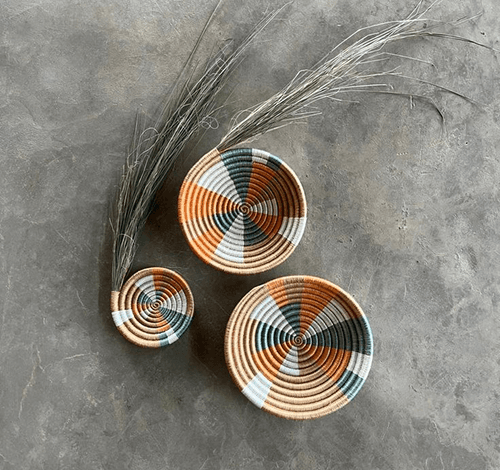
Rwanda's traditional basket weaving is more than just a craft—it's a living testament to the country's rich cultural heritage and the incredible skill of its artisans. For centuries, Rwandan women have been creating these beautiful, functional works of art using techniques passed down through generations.
The Cultural Significance
In Rwandan culture, baskets serve multiple purposes beyond their practical use. They are symbols of unity, community, and the coming together of families. The traditional Agaseke basket, with its distinctive spiral pattern, represents the concept of "coming together" and is often given as a gift during important ceremonies and celebrations.
The intricate geometric patterns found in these baskets are not merely decorative—they tell stories, represent family histories, and carry deep cultural meanings that have been preserved for generations.
Traditional Techniques and Materials
The art of basket weaving in Rwanda primarily uses natural materials sourced from the local environment. Sisal, sweetgrass, and raffia are the most commonly used materials, each chosen for their specific properties and the unique textures they bring to the finished product.
The process begins with the careful selection and preparation of materials. Sisal fibers are extracted from the agave plant, cleaned, and dyed using natural colorants derived from local plants and minerals. The traditional colors—natural beige, deep browns, and rich blacks—are achieved through time-honored dyeing techniques.
The Weaving Process
Creating a traditional Rwandan basket is a meditative and time-intensive process. A single basket can take anywhere from several days to weeks to complete, depending on its size and complexity. The weaver begins from the center, working outward in a continuous spiral, carefully maintaining tension and pattern consistency.
The most skilled artisans can create baskets with incredibly tight weaves that are completely waterproof, a testament to their mastery of the craft. These baskets were traditionally used for storing grain, carrying water, and serving food during important gatherings.
Preserving the Tradition
Today, organizations like Iby'Iwacu are working to preserve these traditional techniques while providing sustainable livelihoods for Rwandan artisans. By connecting these skilled craftspeople with global markets, we ensure that this beautiful art form continues to thrive and evolve while maintaining its cultural authenticity.
Each basket tells a story—not just of the individual artisan who created it, but of a culture that values craftsmanship, community, and the preservation of traditional knowledge for future generations.